Showing posts with label Hiking. Show all posts
Friday, December 20, 2013

CRF: The Best of Croatia

"CRF" is not a crime show you've never heard of, it stands for "Cutting Room Floor." It's been almost a year since we returned from Europe, and we've started to get seriously nostalgic.  To give us all an extra travel fix, we're posting some of our favorite photos that never made it onto the blog.  Here are our favorite unpublished memories and pictures of Croatia.
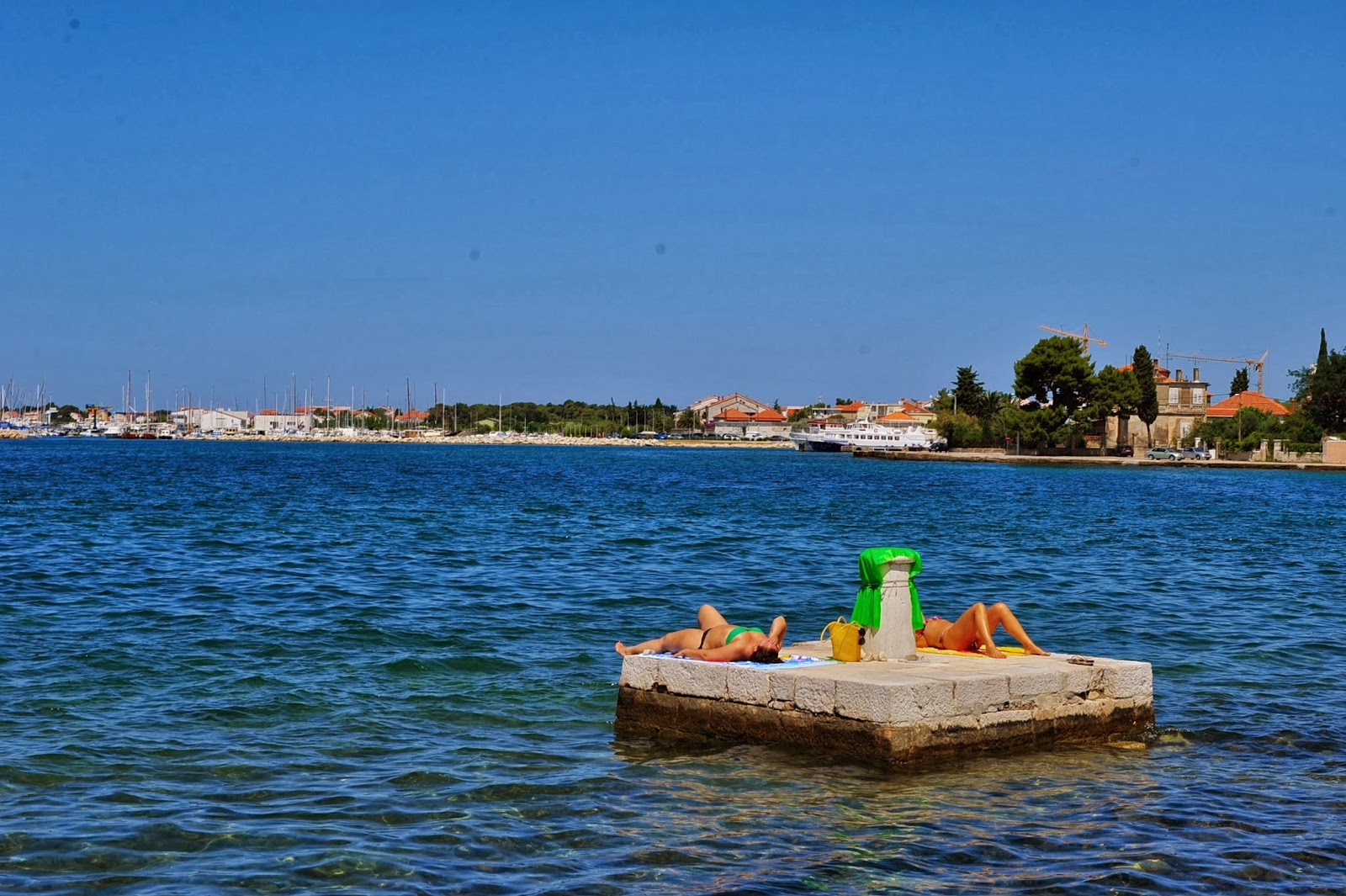
More than any other country, we associate Croatia with hedonism, sun and the scent of saltwater.  Our trip never felt like a vacation, but Croatia is a vacation by definition.  Everyone there was on holiday in one way or another - it was the same for the naked Germans and drunk Russians and sunburned Brits that joined us on those rocky shores.  It was July.  The sun never seemed to go down.
For a few happy days, we stayed at a huge campsite on Cres Island.  There was squid to eat in town and beer to sip on the long oceanside promenade.  When we swam, we were stung by tiny jellyfish.  When we walked in the balmy evenings, we listened to cicadas and waves.  Nearby, in a pine forest, a rusty amusement park spun its blinking, neon magic.
At home in the US, not long after the trip, someone told us that Croatia sounded "scary and Russian."  It's true that in some places, like Zadar, one can find bomb-scarred buildings from the Balkan wars - but you have to look hard.  The scariest thing about Croatia today? Probably the spiny sea-urchins that lurk in the shallow water.
The Dalmatian coast is mostly rock, and some salt-scoured islands feel almost entirely dead.  Real, comfortable, sandy beaches are rare.  Most people sunbathe on concrete slabs.
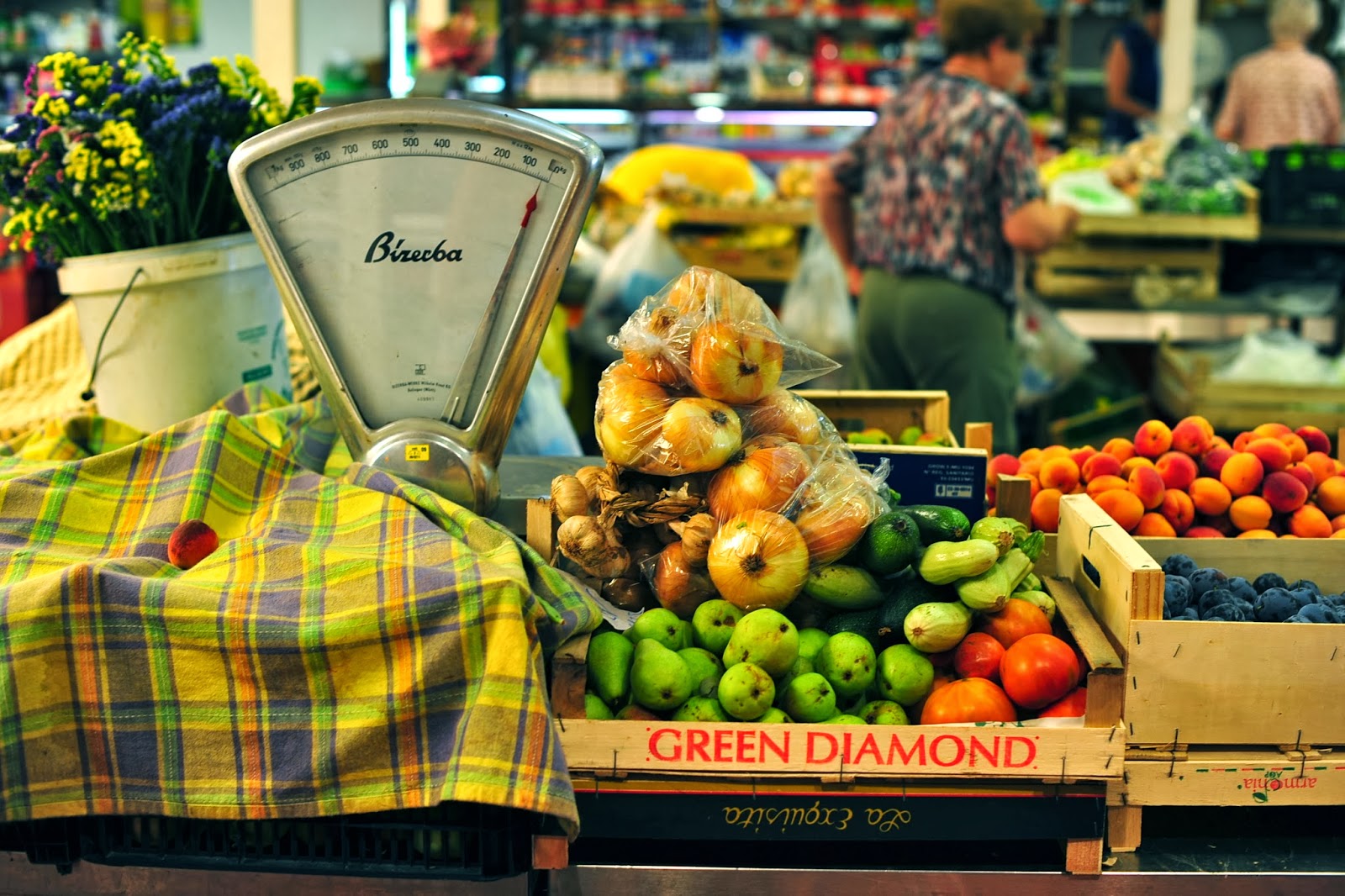
In Opatija, a city where seafood approaches perfection, we had a barbecue of squid and blitva.  The market where we shopped for our supper was made of Tito-era cement and seemed like the only cool place in the sun-baked city.
The heart of the summer - no rain, mild air, a sense that nothing bad can possibly happen - is best spent in a tent.  We soaked up the sun and got into our sleeping bag coated with salt.  We never went inside.  We ate by the ocean, we napped in the shade, we swam and walked and came home to a crowded camping city that smelled always of grilling sausage and suntan oil.
This was the semi-permanent home of one of our neighbors there at Camping Kovačine - grandparents, small children and at least two couples used this one camper as a base.  Did they all sleep inside?  Hard to tell.
Late one night - well past midnight - we were returning to our campsite in Ičići and came across this streetlight game of volleyball.
These scales always remind us of communism.  Every market from Minsk to Budapest to Sarajevo is full of them.
We spent a lot of time near the Mediterranean on the trip, but almost always during the colder months.  The summer seashores are too crowded in Malta or Greece or Provence.  At least, they're too crowded for serious travel.
But there we were, in Croatia during the high season.  We succumbed because there was no other choice.  It's Croatia that we think of first when our minds turn to sunny saltwater.  It was unavoidably perfect.  It was a vacation.
To see all our posts from Croatia, just click here.
To see all the Cutting Room Floor posts, with great pictures from the other 49 countries, just click here.
You have read this article Beaches / Camping / Croatia / Cutting Room Floor / Food / Hiking / Marketplaces / Seaside with the title Hiking. You can bookmark this page URL https://africathoughts.blogspot.com/2013/12/crf-best-of-croatia.html. Thanks!
Friday, November 30, 2012

Where We Could Pull Over

We'd finally found a pull off spot after an hour's drive through the Scottish highlands.  The last of the day's light was about to disappear behind the stream-veined peaks and thick swaths of grey cloud.  Merlin scurried up a hill with his camera, I stayed below and mostly took pictures of his silhouette.  Nikon appendage against an IMAX movie backdrop.  There'd been a castle at the water's edge just a few minutes earlier, there was an island with a single tree standing up from it like a flag just a little further along.  But this is where we could stop.  And we were more than willing to drink as much of it in as possible.
This is a wide shoulder on British country roads, a foot or so between the pavement and the stone walls.  This is in the Yorkshire Dales, England.  Our car was left a few hundred meters back, in the parking lot of the White Scar Cave.  Our jeans were still wet from the rushing water underground and, at only 3:45 PM, that beautiful twilight was already setting in.  So, we walked along the shoulder.  A tight squeeze even on foot.  Most of the time, there's no space at all, hardly enough room for two cars to pass each other.  Our GPS did an admirable job at keeping us on the scenic route, on leading us from one place to another over narrow stone bridges, off pavement onto dirt, through the villages within National Parks and always, always steering clear of private roads that lead off into the woods to a secluded estate.
Pheasants make their way across the road at their own speed, pulling that long, pretty tail behind them like an airplane over the Jersey shore, going extra slow so you can read the promotion banner it drags behind it.  Land Rovers filled with dapperly outfiitted hunters take a sharp turn onto one of those private roads.  And all you want to do is pull over to take a picture.  But there's just no darn place to do it.  So, you snap a photo from the window of your car.  You're in the Lake District now, the English countryside at its most storybook.  It's the land of William Wordsworth and Beatrix Potter, where dogs sit at their owners wellies in all the pubs.   Rolling green with grids of stone walls, cottages with curly cues of smoke rising from their chimneys, farmsteads with gorgeous old barns.  Sheep in their winter coats.

Back in Scotland, up on Cow Hill, there were Highland cattle, squat, long-haired animals that are more Mr. Snuffleupagus than Bessie the Cow.  Sturdy animals for this difficult landscape - one filled with powerful winds and heavy rains.  Other then them, we were alone on our Highland hike, in the shadow of Ben Nevis with views down over Glen Nevis and the Loche Linnhe.  Our car was down at Braveheart Car Park, built for the crew of that great Mel Gibson epic.  Somehow to keep the trailers and equipment trucks while they filmed here on Cow Hill.  I almost began to hear the Braveheart soundtrack in my head, the bagpipes and strings, but my brain kept getting stuck on Titanic.  All James Horner sounds the same.
There's a rugged beauty to the Highland landscape, one that just feels like wild red head and rough wool.  The thistles and gorse that cover the landscape with purple and yellow when flowered, make for a blanket of thick thorn and spikes at the dawn of winter.  Driving along Loch Lomond in Trossachs National Park was spectacular.  "National Park" doesn't mean the same thing in Britain as it does in America.  Here, the area is not so much "parkland" or nature reserves cared for by rangers. They are whole areas deemed too special to develop.  They are unspoiled and pristine, and also the home to thousands of people in villages throughout.  Just off to the right of this photo,  a white house sat in the blip of flat space between two sweeping hills.  It was like an ant between a camel's humps.  The narrow dirt path of pull-off room we'd found was probably the very start of their driveway. 
There are castles and ruins, barns and walls, old towers and bridges all through the British countryside.  Old stone reflected in puddles and the waters of lakes and loches, structures half covered in bright green lichen.  They mostly blend right in with the scenery, a natural fit like a cloud in the sky.  The Ribblehead Viaduct was an exception and, in a rare stroke of luck, we were actually able to stop our car fairly close by.  Twenty-four arches stretch across the valley of the River Ribble in North Yorkshire, England.  It was a marvel of modern technology in its day, a project that resulted in the death of at least 100 labourers whose graves doubled the nearby cemetery.  An incredible structure, young for these parts at only 128 years old.
We just arrived in Wales yesterday, our final stop in the United Kingdom.  The final days of our entire trip - and the weather has begun to look up.  Clear skies make photos easier, but there's still the issue of finding a place to stop.  We drove across The Cob three times (insert corny joke here - ha!).  Back, forth, back we traversed the rock and slate causeway, a sea wall across the Glaslyn Estuary.  To our right (and then our left, and then right again) was this view of the Estuary.  We finally found a construction site a few minutes' walk away and left our car with the workers'.  Then, we strolled The Cob leisurely on its lower level, next to the cars.  Above, on the other side of the causeway more people strolled, alongside the old steam train track which still gets use most days of the week.

When we'd left Warwick, England for Wales that morning, we were warned about recent weather.  "Oh, Wales is flooded,"  a young woman said with wide eyes and a shake of the head.  While its true that parts of Wales experienced terrible flooding, we found most of it still above water.   Nothing compared to the deep water we'd driven through two days before in England.  These tractor tracks were filled with rain, but otherwise the land was dry.  This was a terrible place to pull to the side of the road, by the way.  A tight squeeze for the two-way traffic, a nerve-racking reemergence onto the road.
Just a few minutes further,  Criccieth Castle cut a beautiful silhouette into the sky.  The village  of the same name stood beside it, tucked inland.  As good a place to pull over as any.  We walked along the pier, which jutted out into Tremadog Bay and looked at Wales all around us.  I don't remember the last time I was able to see as far into the distance, the sky was so clear.  Water to sand to stone to dirt to hills with more hills behind that and more behind that.  We parked the car and ourselves for the night, checking in to The Lion Hotel which was hosting "Christmas Evening" for a busload of seniors.  Mince pies, turkey, a raffle and holiday sweaters.  Our car collected a thick coat of frost by the morning.
You have read this article Countryside / Driving / England / Hiking / Scotland / United Kingdom / Wales with the title Hiking. You can bookmark this page URL https://africathoughts.blogspot.com/2012/11/where-we-could-pull-over.html. Thanks!
Saturday, September 8, 2012

Up on Pulpit Rock

You see pictures of it everywhere in Norway, this shelf of a cliff which is most picturesque with a brave person set standing, sitting or laying on its edge.  Possibly even head-standing.  Yep, I saw a head-stander. Pulpit Rock (Priekestolen) is named for its shape as seen from below.  Since that's not exactly the viewpoint most people get of the cliff, I'll just go ahead and say that the name is most appropriate because every person standing at the Pulpit gets a glimpse of heaven, feels a little godly, contemplates their mortality (if they have even the slightest fear of heights).
National Geographic Traveler reports that Pulpit Rock is the most searched image in their entire database.  Lonely Planet has named it one the 1000 Ultimate Sights and, more specific, one of the world's most spectacular viewpoints.  Countless backpackers have called it "awesome, man."  It takes about two hours to get up to Pulpit Rock, with some steep sections and a little scrambling, but the hike's end is so iconic that you see families with toddlers, tourists with flimsy footwear and people generally not ecstatic about hiking make the trek to Pulpit Rock.  I wouldn't necessarily recommend it to any of those people but, hey, adventurous spirits are great! (Though, dryer weather would have been better).
Especially with a wet-and-getting-wetter terrain beneath us, we hikers weren't really making any eye contact with each other.  Everyone was looking down, being careful of their footing, hopping from rock to rock and finding alternative routes across some streams that had sprung up.  The trail is rocky most of the way, paths that would make my rock garden aficionado of a mother swoon.  "Leave me here!" she'd most likely tell me, snapping pictures of the ground at a particularly interesting spot.  There would be no need for her to travel any further... especially because she happens to be afraid of heights.
And oh the height!  Pulpit Rock is 1,982 feet high.  For a comparison, that's 758 feet higher than the observatory at the Empire State Building.  Without windows or walls or even a guard rail between you and the drop.  If you want to compare the natural and the man-made wonders a little more - Preikestolen was formed by glacial shifts approximately 10,000 years ago - as opposed to glacial egos around 80 years ago.
There was torrential rain when I first reached the summit, but the sun came out a smidge when I was only a few minutes away.  So, I scrambled back up to join the other wet, but victorious hikers.  We all pulled back our hoods and looked out.  A communion.  A group who'd hiked all the way up with enormous chess pieces sticking out of their backpacks and big sacks of water to weigh the pieces down, went to work setting up their board while a cameraman filmed.  The head-stander did his head-stand and I looked over the edge.  The world famous view was pretty misted over.  But I was absolutely thrilled to have made it there.  And then I went back down.
You have read this article Countryside / Hiking / Norway with the title Hiking. You can bookmark this page URL https://africathoughts.blogspot.com/2012/09/up-on-pulpit-rock.html. Thanks!
Wednesday, August 29, 2012

Geothermal Iceland!

If you can believe it, all geysers on earth get their name from one Icelandic steam feature – the original Geysir, in south-western Iceland.  It sends up a few high plumes daily, but is rather irregular and infrequent.  A minute’s walk away, though, is this one, Strokkur, which gushes every ten minutes.  It’s still surprising, even when you’re expecting it – even in a country full of geysers.
Iceland is the most volcanic island on earth.  Over one quarter of the country is an active volcano zone.  This is somewhat frightening, and has its numerous downsides.  But there are also benefits to living where the earth’s crust is so thin and fractured.  For one thing, there’s no shortage of energy – heat from the earth’s core is readily accessible, and used for everything from producing electricity to growing exotic flowers.  Then there are all the hot springs and vents, which have myriad uses.  We’ve discovered that the Icelandic people have turned steam and geologic heat into a kind of magic.
“And back here,” the guide said with perfect nonchalance, “we have our volcano.”  We were taking a short tour of the Hellisheiði power plant, some twenty miles outside of Reykjavik – it’s a new facility, with lots of brushed aluminum accents and billowing steam.   From pipes drilled several kilometers down into the heart of the volcano (“No danger, it erupts every five thousand years,” we were told), the plant extracts superheated steam and water.  The steam runs turbines that power the entire Reykjavik area - free of charge - with plenty of energy left over.  The hot liquid is used to heat up potable water, which is piped to the capital.  All the hot water in the city come from here.  “We only lose two degrees,” the woman said, with obvious pride.
Also, the hot water is used to heat the buildings in Reykjavik and is run through pipes beneath streets and sidewalks to keep them free of ice and snow.  “It’s very handy for heavy traffic points,” our guide told us.  It’s amazing – they have more heat and electricity than they know what to do with.
Iceland produces almost one hundred percent of its own energy, mostly from geothermal turbines (though there are some hydropower dams, too).  Almost all of it is provided to the population at zero cost, and the surplus is sold to industry.
Of course, the geothermal experience that most travelers in Iceland have is one on a far smaller scale.  Almost every town in the country has a hot spring bath.  The formality of these places varies from built-up, spa-like centers to simple holes in the ground.  As my cousin (and Iceland guidebook author) Evan Spring told me, “all you have to do is dig a hole in the ground and hot water comes up.”
The baths are generally cheap and friendly places, used more by locals than visitors.  This pool, at Krossnes, is one of the northernmost and most remote.  At the very end of a long, dirt, Westfjords road, it’s exposed to bitter wind and drizzle off the sea.  Still, the water is warm enough – a constant one hundred degrees Fahrenheit – that it doesn’t matter.  It always feels luxurious.
There are also wild hot springs and pools, steam holes and warm streams.  About a half hour hike into the mountain valley of Reykjadalur, the Klambragil “river” is a comfortable bathing temperature nearly year round.  The air was only about forty degrees Fahrenheit when we visited (in late August!), but the water was hot-tub temperature.  We spent half an hour soaking with a dozen or so other hikers.
Icelanders also use the geothermal hotspots for natural steam rooms, and many houses have their own “hotpots” - small, spring-fed tubs.  From these are derived the similar “mudpots,’ which are obviously much dirtier.
They grow bananas in Hveragerði, amazingly enough.  They also have a thriving tomato industry, and beautiful local roses.  Heated by water from deep within the core, lit by geothermal electricity, the town’s many greenhouses are almost completely self-sufficient, even with so many dark days in the winter.
From the roadside, as evening approaches, the orange grow-bulbs burn like firelight through the trees.  It’s a pretty sight – comforting, but also curiously alien.
Hveragerði has an unusual amount of geothermal activity, even for Iceland, and its residents have long taken advantage of the abundant steam-vents and bubbling water.  In 1930, a local dairy began pasteurizing all its milk using natural steam.  Before that, farmers baked their dark bread in the hot earth.  Some of the houses have used geothermal heat for centuries.
Kjöt og Kúnst – a bakery and café in town – prepares most of its food with steam and hot-earth ovens.  Everything on this plate was cooked with heat from the earth’s core: the steamed carrots, the bread and the pot of plokkfiskur (mashed cod and potato with cream and cheese).
Even simpler is hard-boiling eggs in one of the hot streams.  The Hveragerði geothermal park is free, but a local egg to cook is 100 kroner (about eighty cents).  The dangling mesh sack is provided free.  Here, a tourist lowers two eggs into a pot submerged in the steaming trickle.  Fifteen minutes later, she pulled her eggs up, fully cooked.  I asked her how they were.  “Perfect,” she said.  “Fudgy center, no rubberiness to the white, not a trace of grey.” *
An information board in the park tells of a (possibly mythical) “hot spring bird."  They are said to have dived and disappeared when people approached.  If caught, they were very strange to eat.
“…their meat does not become tender in boiling water,” we read, “but if they are immersed in cold water they become cooked and edible within one hour, but have a ‘chilly taste.’”

*Disclaimer: the tourist was Rebecca.
You have read this article Food / Hiking / Iceland with the title Hiking. You can bookmark this page URL https://africathoughts.blogspot.com/2012/08/geothermal-iceland.html. Thanks!
Friday, May 11, 2012

Worshiping Nature

We've spoken with a lot of people here in Macedonia.  It's rare that we pass a day or even an afternoon without pleasantries that turn into drinks or an invitation for future drinks with a local.  In this time, we've been asked what religion we are and - just yesterday - "do you believe in god?"  Taken aback by both questions, we didn't have ready, assured answers.  What we did know - and were happy to report - was that we'd visited a lot of places of worship in their wonderful country.  What had brought us to most of them, however, was a different kind of worship.
Sometimes, you just need a destination to define your journey.  Macedonia is a beautiful, wonderful place to hike.  You'll stumble upon any number of things in a short period of time.  There are over 50 lakes here and 16 mountains over 6500 feet.  But what you'll stumble upon most often, are churches.  The tourist information available for the country focuses on its monasteries and churches.  And why not?  They are plentiful and old, picturesque and historic.  For us, a forest chapel is like a waterfall - except that you can't hear it from a ways away.  It's that place to arrive at which defines your last hour or two or three as a journey to a remote place.
Arriving there, right then, you feel a part of a living history.  You think about how the hike you just took as a nature joyride was a commute born out of necessity for the small chapel's congregation.  It being placed that far outside of the main village was just a part of its beauty and purpose.  When I reach churches like this one, in Brajcino, I feel like there's no way it wasn't placed here in order to give every single worshiper this magnificent lookout point.  To worship nature on the way to mass - I like to think, as a part of mass.
Inside one of the remote churches in Brajcino, we found candles recently blown out and the matches used to light them.  There were unused ones in a box for the use of any visitor.  This was not shuttered or forgotten, it was clearly still in use.  People all over the country tell us about how their town used to have multiple churches, "one for each family."  In Prilep, Hristijian remarked that he had never been to his friend's church before - just two blocks away from his.  In Macedonia, it is not only your faith that is personal and held dear, it is also the physical place of your worship.
Macedonia became its own country in 1991.  For many, an important step to national and cultural independence was the archbishopric of Ohrid's break away from the Serbian Orthodox Church in 1958.  The churches of Ohrid are steeped in history.  Above, the interior of the Church of St. Sophia, built sometime between 800 and 1000 AD.  It was one of the first houses of worship constructed after the official switchover to Christianity.  Of course, it was turned into a mosque for a while during Ottoman rule.  All the churches were.  We visited the 'cross mosque,' which is literally a mosque with a cross on top.  "The only one in the world!"  (They've never been to Eger, Hungary).  For us, all of these houses of worship were wonderful trail markings on a path around the lake.   Exquisite blazes.  
In Prilep, the mosque has seen better days.  It is ruined and unlit at night.  The inside appears to be a favorite peeing spot according to our noses.  The clock tower nearby is topped with a cross.  Ruined churches and mosques have a sadder feeling to them when within a town or city.  Out amongst grass and old stone walls, their decay feels natural.  It feels less like neglect and more like the sign of times gone by.
There are countries that have felt more religious than Macedonia feels.  In some, women wore headscarves, in others, roadside shrines dotted the Is and crossed the Ts of the countryside.  Here, it's just a part of landscape.  A church pops up in a field the same way god pops up in conversation.  We will leave here with memories of long sweaty hikes and the cool stone churches at the end of them.  And at least half a dozen prayer cards in our backpack.
You have read this article Countryside / Hiking / Macedonia / Religion with the title Hiking. You can bookmark this page URL https://africathoughts.blogspot.com/2012/05/worshiping-nature.html. Thanks!
Monday, May 7, 2012

Prilep and the American Dream

Invitations in Macedonia come like threats.  There's no way to demure, you've been invited.  And so we ended up drinking rakija with a family in the outer limits of Prilep, an ancient tobacco town set down where the Pelagonia plains meet the Rhodope mountains.  We talked with the family about America and Macedonia in their front yard, sitting under a plum tree and waving to neighbors and passers by.
Two brothers talked about their father, who sat with us but spoke little English.  Hristijan, the younger brother, told us how their father had gone to Australia but had come back because he was in love with Hristijan's mother, a decision that seemed unbelievable to him.  "But he likes it here in Macedonia," Hristijan said, as though explaining something blasphemous.  The father nodded.  Later, he said that we should take a young nephew or two home with us in our suitcases.  It was a joke, but a heavy one.  Everyone wants to leave Prilep.
It's too bad, because Prelip is a great town.
Afflicted with very low self esteem, this town of seventy thousand has a lot going for it.  It seems that the population has begun to believe the guidebooks, which dismiss Prelip as an uninteresting, blue-collar town that won't fit easily into an Ohrid to Skopje whirlwind tour.  It's true that it's out of the way, isolated from the main tourist hubs in the western part of the country, and that there's a scant four or five places to stay, but to give it only one page (like Lonely Planet does) in a guide is shameful.
The rakija that we drank with Hristijan, his father, his brother Pancho, his friend Goran and Pancho's wife Valentina was homemade from village plums and a pale green - colored by sprigs of peppermint in the bottle ("good for the stomach").  It was strong enough to burn, but well made enough to be complex and subtle.  As we sat, a few neighbors drove by with a cart full of firewood and two plastic barrels.  Jokes and pleasantries were exchanged.  When the men left, Hristijan told us that they were going to a friend's still, off to make their own rakija.  "Why is it illegal to make alcohol in America?" they asked.  "Here it's tradition, it's what we drink for thousands of years.  This IS Macedonia!"
We'd arrived at their house after a hot hike up to the towers of King Marco, who is a legendary figure in the national folklore but was in fact a minor ruler in the 14th century.  The views out over the tobacco plains and low mountains were spectacular, the kind of open, rock-and-grass walking that makes this region so appealing.
The brothers had learned English watching westerns with their father.  The elder man liked the landscapes of the movies because it reminded him of home; the dust, the crowns of rock, the wide vistas.  In fact, it feels a lot like an American town here - though, in some ways, much more colorful.  Tobacco fields creep right up to the streetlights and sidewalks, people buy their loose smoke in the markets.  There are more cafes here than in provincial America, the town center is full of life, there aren't any empty storefronts.  It feels, a little, like an America of the past.
The town is appealing, with some wide avenues and narrow, medieval lanes.  There are plentiful trees and friendly people, dozens of busy watering holes and a constant burble of conversation.  There are a few nice museums, some handsome old houses, a vibrant market.  It's the kind of undiscovered outpost that travelers crave, where the local customs mix easily with modernity in an unaffected, friendly way.  Tourists are still a rarity, university students are abundant, everyone knows everyone else and nobody's in a hurry.  It's a perfect example of what we call "cafe culture."  In other words, it is much more cosmopolitan than its citizens think it is.
We stopped into this blacksmith's shop one evening.  An old man stood by the furnace and anvil, a couple of friends sat nearby, talking.  When I asked if I could take a picture he pulled an ax head from the coals and began pounding it rhythmically.  After a few clamorous moments, it had achieved a rough shape, and he put it back into the coals and smiled.  "It's made easily," he said (in semi-russian that we only kind of understood) and winked.  His face was lopsided and mischievous, his eyes were bright blue.  We realized that it was the first time we'd ever seen a real, working blacksmith's shop that wasn't part of some museum or skansen.
During a tour of some of the town's outer neighborhoods by Hristijan and Goran, the two friends waved to almost everyone they passed, occasionally stopping the car (yes, this was after we'd finished the bottle of rakija) to have a few words with someone.
Hristijan showed us the ancient Monastery of the Archangel Michael, and Goran showed us his church.  Hristijan sat for a minute with friends at a picnic table and Goran took us to a new amphitheater that he and his neighbors had built.  The sun was getting low and the light was golden.  Children rode their bikes nearby, birds sang their evening songs.  The amphitheater was small and quiet.  Goran told us that it was meant to give the town something like Ohrid or the Greek cities, a place for the community to come together.  It was striking, this closeness of people and the many friendships that they all shared.  When we were being driven back to our hotel, much later, Goran and Hristijan talked reverently about the man who had gone to America, built a fortune and just returned to buy the hotels and set up a factory.  As they dropped us off, they ran into a man they both knew walking with his wife and new baby.  They all exchanged hugs and gave the baby many kisses.
As we sat in that sunny yard, having a last cup of coffee and lemonade, Hristijan told us that his father had built their house by himself and was justifiably proud of it.  When Rebecca told him that my father had also built his own house, Hristijan leaned toward me and struck a wistful tone.  "Merlin," he asked, "do you think we will build houses for our families?"
The question touched on many things - his father's happiness in Prilep, thoughts about America, the hope for a better life.  Hidden there was a different question: where would he build his house?  Many times Hristijan talked about American television and what he had seen, about the movies.  He'd asked about what one could earn in America doing different jobs.  These are common questions, common strains in the conversation of far away places.  It's hard to address them without sounding disingenuous.  Of course living in America is wonderful, but it's not like the television shows.
That night we went out for dinner in the town center.  It was Friday night and the crowded squares were full of laughter.  The warm air smelled like imminent summer rain.  Girls in short skirts linked arms and clipped down the streets in high heels.  Boys in dark sunglasses chased them on motor scooters.  Groups of friends spilled from one pool of light to another, from the music of one cafe to the next.  The city was beautiful, a jangling mix of colors.
We began to talk about what Hristijan wanted, about how it's natural for people to want to move somewhere better.  After all, living in Macedonia isn't easy.  But seeing a place like this - a place that feels so alive and friendly, where everyone is acquainted and strangers are invited in for a drink - it's hard to believe that dusty American towns actually are better.
Don't believe the guidebooks or American television shows - Prilep is a lot nicer than people think.
You have read this article Cities / Hiking / Macedonia with the title Hiking. You can bookmark this page URL https://africathoughts.blogspot.com/2012/05/prilep-and-american-dream.html. Thanks!
Tuesday, October 4, 2011

The Lakes of Vall d'Incles

What's great about Andorra is that for as small as it is, there's still room to get away from it all. "It all," meaning the shopping, hotels, terribly confusing roads and traffic. You simply have to go up - up into the Pyrenees. There's something wonderful about climbing upward out of the hustle and bustle of a place into a landscape that is so vast and magnificent that you can barely comprehend it, but also somehow feels like it's entirely yours. It's like the adult equivalent of escaping to the attic. There's even that big part of you that wants to move up there, until you realize that you're really far away from the bathroom and the fridge.
We arrived in Vall D'Incles right after breakfast. Andorra is the land of valleys. It's often referred to as The Principality of the Valleys of Andorra, in fact. Vall D'Incles is said to be one of the prettiest. In the summer, its accessibility and proximity to a built up resort town fill it with walkers. But this isn't the summer - nor is it ski season, which is the main draw of greater Andorra. So, we nestled our car into a shady spot on the side of the road and walked up to see some lakes.
The initial hike was steep and the altitude made breathing a little difficult. These aren't the Alps or anything, but it's high nonetheless. A yellow helicopter zoomed back and forth overhead and we were careful not to raise our cameras up too high, as not to give a mistaken rescue wave. Also above us was an enormous eagle and a trio of buzzards. Around our feet were little purple flowers that looked exactly like crocuses, but couldn't possibly be, right? When we reached our first lake, Estany de Cabana Sorda, we found it half dried up and flanked by construction workers. The helicopter had just dropped of some materials. The scenery was so immediately breathtaking, though, that we didn't mind too much - perfectly happy to move on to explore other lakes nearby.
The landscape is drawn more like a soundwave than an electrocardiogram, with ridges that send you down, up and around often enough to put you out of view and earshot from what you've just left behind. So, as soon as we'd turned a corner away from the construction, we heard no noise at all. The same was true for the cowbells that tinkled now and then, strapped to a group of mares grazing near a stream. Even the helicopter made only a short burst into our silence. The first of the two "Salamander Lakes" was, indeed, filled with salamanders and surrounded by cracked earth that was actually wet enough to leave a footprint in. The kept happening, I felt. Something would look a certain way and then complete surprise me upon approach. Like the yellow shrubs that looked like pompoms and felt like porcupines.
I think a huge part of mountain lakes' appeal is the feeling you get trekking toward a body of water, an oases. It feels like the most logical, functional destination point in the world, but also a little bit magical. Because even when you know exactly where one is and are directing all of your physical energy pointedly toward it, a pool of water this high above sea level still feels a little bit surprising. Like you've stumbled upon it. The second Salamander lake wasn't as clear, but the light played off of the murkiness beautifully. We really couldn't have asked for a more beautiful day for our first hike in Andorra.
We soaked it all in over our lunch of herb-crusted Andorran goat cheese, right from this part of the country, Canillo. It had a very similar taste and consistency to cheddar. The thick coating of thyme, rosemary and lavender gave the texture a welcome toothsomeness, like shredded coconut - and, obviously, a flavor complexity. We've decided that cheese makes the best hiking lunch. All you need if the knife you're already carrying and a firm enough selection to hold up in your backpack. It is as simple a meal as can be, but can feel downright luxurious. It's got protein for energy, density for fullness, fat for insulation. Plus, cheese just feels right in the mountains - like shellfish on the coast.
The terrain kept changing from rock to dirt to spongy, green grass mounds. In the distance, it looked like a whole world of surfaces were out there ready to be hiked on - hills of brown corduroy and green velvet. As we spotted our final lake, Estanyo Del Querol, in the distance, we felt like we could keep going on like this for hours. But we've got about ten more days to conquer more of it. Though, sadly, not nearly close to it all. Who said Andorra is too small for a two week stay?
In this climate, the mornings are cold, the afternoons are blazing and the difference between standing in the shade and the sunlight results in a lot of de- and re-sweatering. ItUp above the treeline, we felt like we were having this direct conversation with the sun. Over the four and a half hours, it traveled with us. It shone in our faces during the descent, forcing us to look down and pay closer attention to our footing. It rewarded our hard work by creating colorful light shows in the water and made us understand the scale of it all by casting gorgeous shadows against the larger peaks. It was the sun that finally told us to head home, beating down on our Autumnal complexions.
You have read this article Andorra / Countryside / Hiking / Mountains with the title Hiking. You can bookmark this page URL https://africathoughts.blogspot.com/2011/10/the-lakes-of-vall-d.html. Thanks!